News & Articles
Latest EA Studios Blog Posts
What Is An Artist’s Proof? What Does This Mean When You’re Buying Art?
What are people referring to when they talk about an artist’s proof? Art collectors often want to purchase the rarest and most desired work from both renowned and up-and-coming artists. One way a collector increases the value of their collection is by purchasing limited edition prints and artists’ proofs. But what is the difference?
There aren’t any significant differences between artists’ proofs or limited editions, however, artists’ proofs are the copies of the original that the artist kept for personal use. Usually, the artist will hold no more than 10% of the total editions as the artist’s proofs.
The concept of the artist’s proof dates back to the era of traditional printmaking, when techniques such as etching, lithography and woodcut were the primary methods for reproducing artwork. Before a full edition was printed, the artist would pull a small number of impressions from the plate or stone to evaluate the quality of ink coverage, tonal balance and fine detail. These early pulls served a practical purpose: they allowed the artist to make corrections and adjustments before committing to the final print run. Because they were produced during this refinement stage, proofs sometimes exhibit subtle differences in colour saturation, line weight, or contrast that set them apart from the standard edition.
How To Identify A Limited-Edition Print?
The easiest way to tell if you are viewing a limited-edition print rather than an artist’s proof is by looking at the writing in the lower portion of the print or accompanying paperwork. Limited proofs or editions will identify which ‘copy’ it is in the run. For instance, it would say 50/99, meaning it is the 50th print of a total of 99. In addition, the artist will often add their signature to further authenticate such prints or collectibles.
This numbering convention is standard across most fine art print mediums and is typically pencilled by hand in the lower margin of the print. It is worth noting that the sequence number (the first figure) does not necessarily indicate the order in which the prints were pulled from the plate; in many workshops, prints are numbered only after the entire edition has been produced and inspected. Because of this, a print numbered 1/99 is not inherently more valuable than one numbered 99/99. The edition size and the artist’s reputation are far more significant factors in determining worth.
What Is An Artist’s Proof?
Now that we have determined how to validate if a piece of art is part of a limited edition let’s look at what characterizes it as an artist’s proof.
Compared with a limited-edition print, there usually aren’t as many artists’ proofs printed or created. In most cases, an artist’s proof is more valuable due to this smaller amount. Another critical difference is artist’s proofs may not perfectly match when compared with the original artwork or the limited-edition prints.
These discrepancies contribute to their uniqueness and ultimately to the increased value. When artists begin mass-producing their work for sale, they will receive proofs or samples to ensure the colour and quality are identical to the original piece. In most cases, it takes a few different runs to get an exact match.
In some instances, the colour may need to be corrected, or it may be missing an intricate detail from the original. In the past, this was a more common occurrence because prints were made with plates, whereas today, art reproduction is a much easier process.
It is also helpful to know that artist’s proofs are only one category within a broader family of proof impressions. Collectors may encounter designations such as “Bon à Tirer” (BAT), which translates from French as “good to pull” and refers to the single proof the artist has approved as the quality benchmark for the entire edition. Printer’s proofs (PP) are copies reserved for the master printer or printing house, while hors commerce (HC) proofs are intended to be kept outside of commercial sale. Each designation carries its own conventions around scarcity and collectibility and understanding the differences helps a buyer assess both authenticity and relative value.
From Original To Print
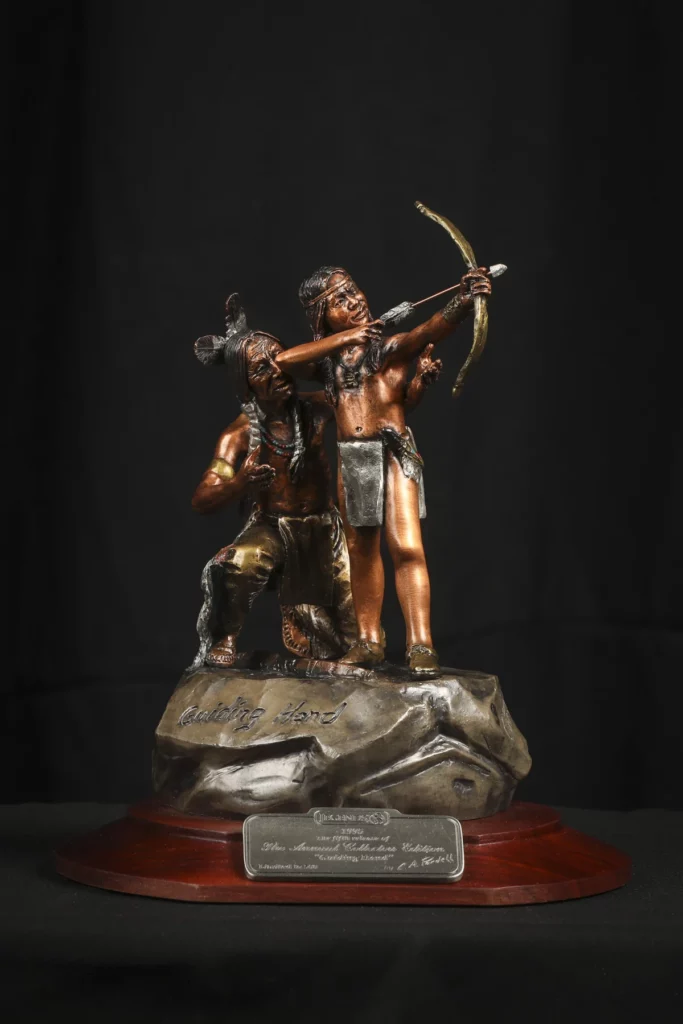
Digital media has allowed an elegant and meticulous transfer of an original painting or sculpture to print editions and recreating sculptures. Artist’s proofs will also be numbered along the bottom, the first number being which proof, followed by the total number of artist proofs. Additionally, the initials AP will often be present to signify it being an artist’s proof. Some artists will write these numbers in roman numerals, so they are easily distinguished by art collectors as artist’s proofs instead of edition prints. Artist’s proofs can be worth 20% to 50% more than any limited editions.
Modern giclée printing and high-resolution scanning have dramatically improved colour accuracy, making it possible to produce reproductions that are nearly indistinguishable from the original. However, this technological precision has also shifted the meaning of an artist’s proof. While historical proofs were a necessary by-product of the printing process, contemporary proofs are more often an intentional designation that honours the tradition while offering collectors a smaller, more exclusive subset of the edition. Many artists continue to reserve their proofs for gifts, portfolio pieces, or personal archives, which means they enter the secondary market less frequently, a factor that can further increase their desirability among serious collectors.
What Does This Mean When You’re Buying Art?
When purchasing art, it is important to request all information about the limited number of print editions and artists’ proof from the gallery. This is crucial to know the actual value of the piece. Knowing which print from the total you are considering purchasing is also essential. For example, if only 30 prints or pieces were created, they would hold a higher value than if there were 200 printed. The same goes for artists’ proofs.
Another important detail is to ask if the original artwork was demolished or kept by the artist. Suppose an artist has kept the original art, whether a photo negative, sculpture or canvas painting. In that case, there is always a possibility they could run further editions, which inevitably would decrease the value of any previously purchased art.
Reputable galleries will provide a certificate of authenticity (COA) that documents the edition size, proof designation, medium and any distinguishing characteristics of the piece. When evaluating a potential purchase, collectors should look for documentation that specifies whether the edition is closed, meaning no additional prints will ever be produced, or whether the artist retains the right to expand the run. A closed edition paired with a low total count is generally the strongest indicator of long-term collectibility. It is also wise to keep all paperwork, receipts and COAs stored safely, as these records are essential for insurance, resale and provenance tracking.
Additional Artist Proof Information
For more information about artists’ proofs and any other inquiries regarding the value of art editions, please contact EA Studios. To view limited editions of well-renowned artists like Norval Morrisseau or David Wong, please contact us to make an appointment.