News & Articles
Latest EA Studios Blog Posts
How To Tell Real BC Jade From Imitations
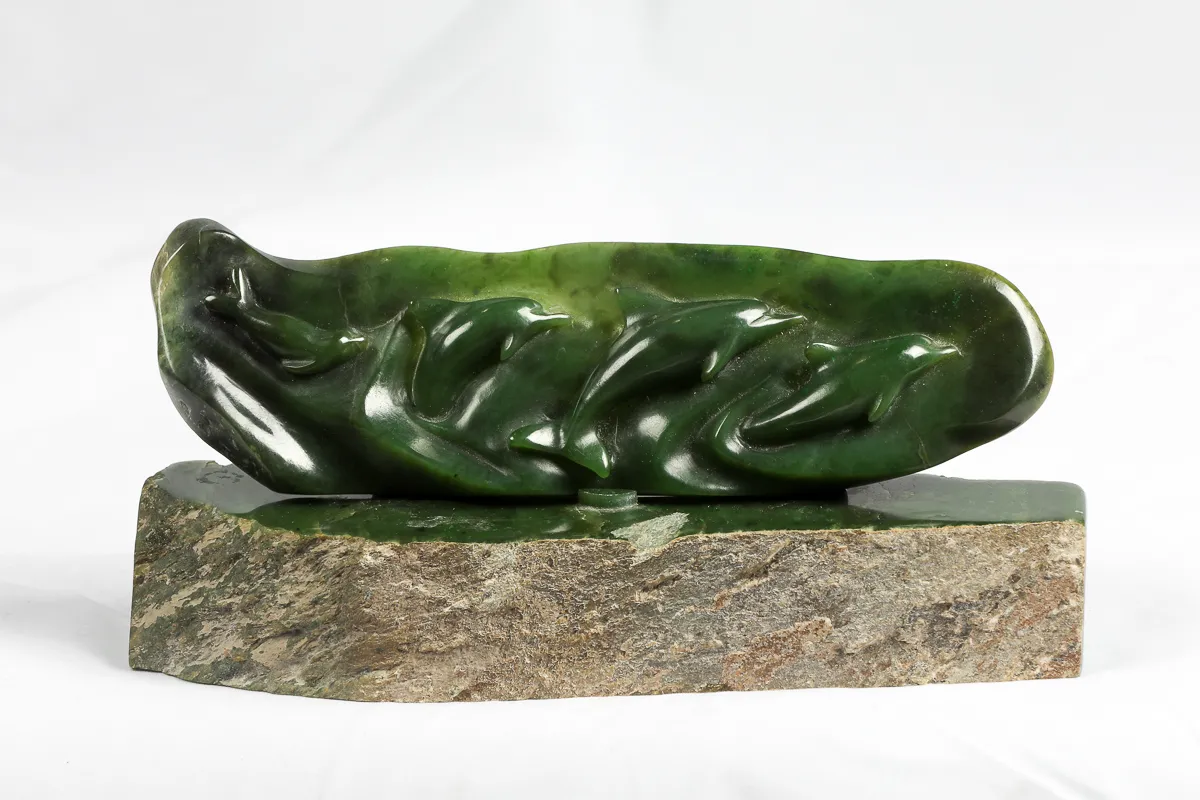
British Columbia’s jade deposits represent some of the finest nephrite sources in the world. This remarkable stone, carved from the ancient geological formations of Canada’s western mountains, has become the cornerstone of exceptional sculptural works that celebrate our nation’s natural heritage. Yet the growing appreciation for BC jade has attracted numerous imitators seeking to capitalize on its reputation.
Understanding the specific characteristics of British Columbia jade allows collectors to distinguish authentic provincial stone from both inferior nephrite and clever substitutes. While our previous guide covered general jade authentication, BC jade possesses unique qualities that reflect its geological origins and cultural significance in Canadian artistry.
The Geological Signature Of BC Jade
British Columbia nephrite forms under specific conditions that create distinctive visual and physical characteristics. The province’s jade deposits, primarily located in the Fraser River region and northern territories, produce stones with remarkable consistency in quality and appearance. This geological heritage results in jade that typically displays rich, deep greens with occasional white veining that speaks to the stone’s mountain origins.
The mineral composition of BC jade creates a density and hardness that distinguishes it from nephrite found elsewhere. When examining potential BC jade pieces, consider the stone’s substantial feel and the way light interacts with its surface. Authentic provincial jade often exhibits a subtle translucency that allows light to penetrate just beneath the surface, creating depth without complete transparency.
The colour palette of genuine BC jade tends toward forest and sage greens, though exceptional pieces may display the coveted darker emerald tones. The stone rarely appears in the bright, artificial greens that characterize many treated stones or glass imitations.
Recognizing Common BC Jade Substitutes
The marketplace presents several materials commonly misrepresented as BC jade. Serpentine, abundant throughout British Columbia, shares similar colouring but lacks jade’s density and acoustic properties. When tapped gently, serpentine produces a dull sound compared to jade’s clear, resonant tone.
Prehnite, another green stone sometimes confused with jade, displays a more yellowish cast and typically appears more translucent than authentic BC nephrite. The surface texture differs significantly, lacking the smooth, waxy feel that characterizes properly finished jade.
Glass imitations attempt to replicate BC jade’s appearance but fail to match its thermal properties. While glass may initially feel cool, it warms quickly when handled, unlike genuine jade which maintains its temperature for extended periods.
Dyed stones present perhaps the greatest challenge for identification. Inferior jade or other minerals treated with green dyes can superficially resemble BC jade until closer examination reveals unnatural colour distribution or artificial saturation that nature never produces.
The Cultural Context Of Authenticity
British Columbia jade carries cultural weight beyond its material properties. Indigenous communities have worked with this stone for generations, developing techniques and traditions that honor the material’s spiritual significance.
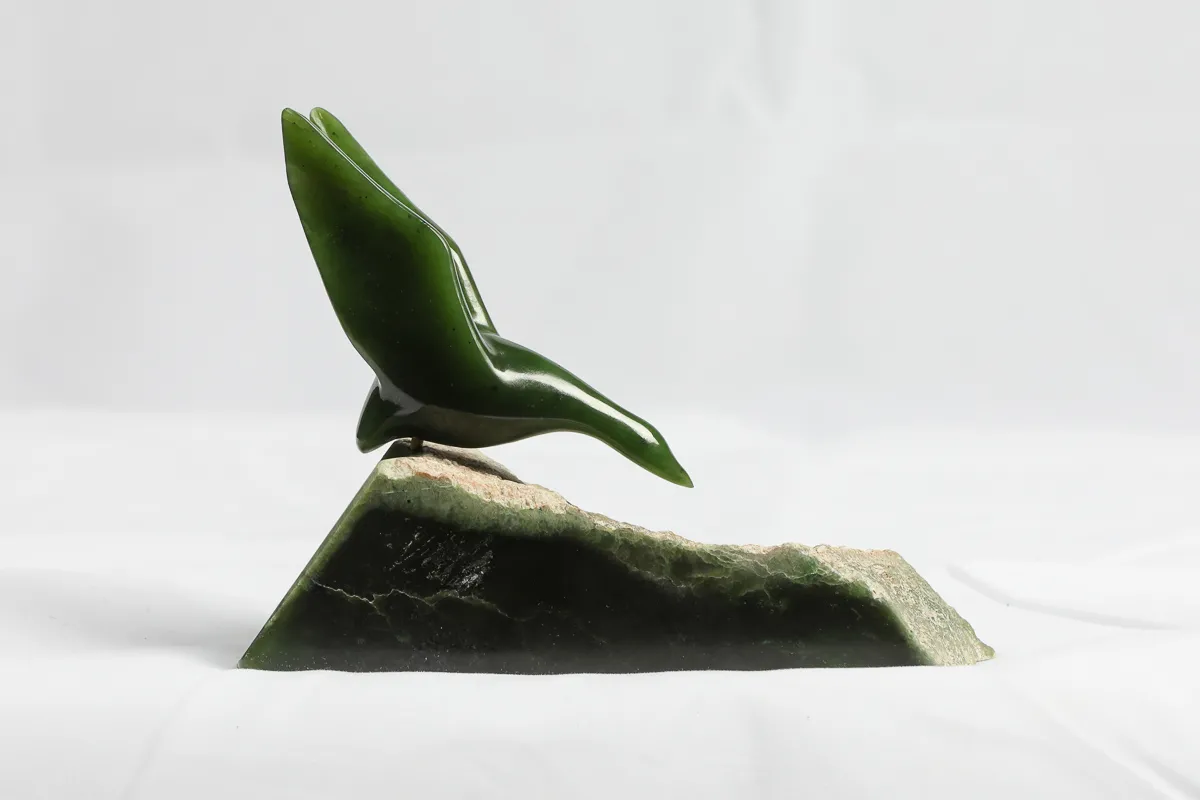
Master sculptors familiar with BC jade understand how the stone responds to different carving techniques. They work with the natural grain and colour variations rather than against them, creating pieces that celebrate the stone’s inherent beauty. This knowledge becomes apparent in the finished work’s flow and the artist’s ability to maximize the material’s visual impact.
Contemporary artists like David Wong have built their reputations on authentic material selection and technical excellence. Their work demonstrates how genuine BC jade responds to skilled hands, creating sculptures that could never be achieved with inferior substitutes.
Technical Testing Methods
Beyond visual and tactile examination, specific tests can reveal BC jade authenticity. The scratch test, while requiring caution, can distinguish jade from softer imitations. Genuine jade’s hardness rating of 6.0-7.0 on the Mohs scale means it should resist scratching from most common tools while showing ability to scratch glass.
The specific gravity test provides definitive results for serious collectors. BC jade typically registers between 2.90-3.03, noticeably higher than most substitutes. Professional testing equipment offers precision, though experienced collectors often develop an intuitive sense for authentic jade’s weight.
Under ultraviolet light, some treated stones reveal their artificial nature through fluorescence or colour changes not present in natural BC jade. While not all authentic jade remains completely inert under UV light, dramatic reactions often indicate treatment or substitution.
Heat sensitivity testing should be approached with extreme caution and only on small, inconspicuous areas. Authentic jade shows minimal reaction to brief heat exposure, while plastic or resin imitations may show surface changes or emit distinctive odours.
Provenance & Documentation
Authentic BC jade often comes with documentation regarding its source and journey from rough stone to finished piece. Reputable dealers and galleries like EA Studios maintain records of their suppliers and can provide information about specific deposits or mining regions.
The chain of custody becomes particularly important for significant pieces. Understanding who carved the stone, when and where it was mined, and how it reached the current seller adds layers of authentication beyond physical testing.
Certificates from recognized gemological laboratories provide independent verification, though collectors should verify the laboratory’s reputation and testing procedures. Not all certificates carry equal weight in the jade community.
Developing Regional Expertise
Familiarity with BC jade develops through exposure to authenticated pieces from various provincial sources. Each region produces jade with subtle variations in colour, pattern and texture that become recognizable to experienced collectors.
The Fraser River area produces jade often characterized by its deep, consistent green coloration and minimal inclusions. Northern BC sources may yield stones with more dramatic colour variations and interesting matrix patterns that create visual interest.
Understanding these regional characteristics helps collectors identify not only authentic BC jade but also appreciate the diversity within the provincial deposits. This knowledge enhances both collecting decisions and overall appreciation for British Columbia’s geological heritage.
Supporting Canadian Artistry
Choosing authentic BC jade supports not only personal collecting goals but also the broader community of Canadian artists and craftspeople who depend on quality materials for their work. When collectors demand authenticity, they create a market that values genuine materials and skilled craftsmanship.
The investment in authentic BC jade pieces contributes to a cultural legacy that celebrates both our geological heritage and artistic traditions. This connection between material authenticity and cultural significance makes the effort to distinguish real from imitation particularly meaningful for Canadian collectors.