News & Articles
Latest EA Studios Blog Posts
The Journey Of BC Jade: From Quarry To Carving
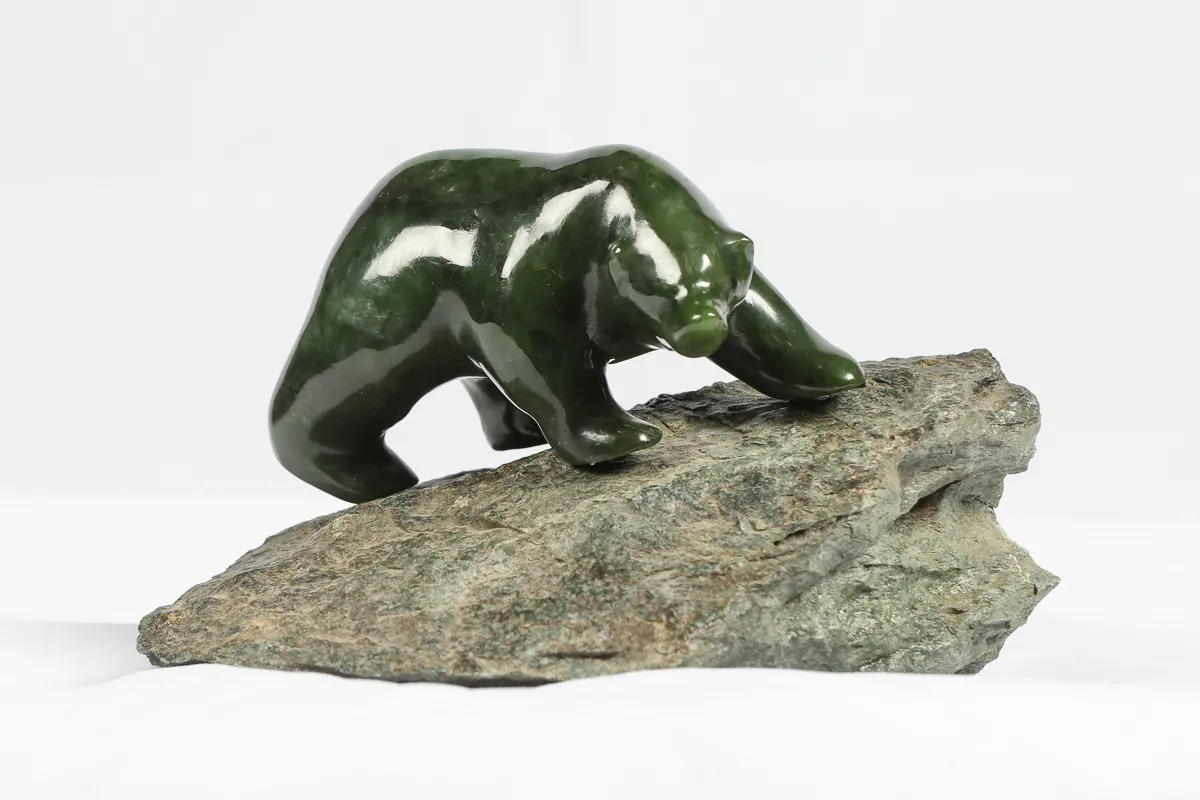
The emerald treasures hidden within British Columbia’s mountainous terrain tell a story that spans millions of years and countless generations of artisans. From its ancient geological formation to its transformation in contemporary sculptors’ hands, BC jade represents one of Canada’s most remarkable artistic materials and cultural legacies.
This extraordinary stone’s journey from remote quarries to gallery walls reveals the intersection of geological wonder, Indigenous wisdom, pioneering spirit and modern artistic mastery. Each carved piece embodies not only the artist’s vision but also the profound history embedded within the stone itself.
Where Jade Comes From
Millions of years ago, when tectonic forces shaped western Canada’s dramatic landscape, the conditions were perfect for jade formation. As oceanic plates collided with the North American continent, intense pressure and heat transformed serpentine minerals into the interlocking crystal structures that define nephrite jade.
These geological processes concentrated BC’s finest jade deposits primarily along the Fraser River drainage and in northern territories near Cassiar. The resulting stone displays the deep forest greens and occasional white veining that distinguish British Columbia jade from deposits elsewhere in the world. This ancient formation process created material with exceptional toughness and workability that would later prove invaluable to both traditional toolmakers and contemporary sculptors.
The stone lay undisturbed for millennia until Indigenous peoples discovered these remarkable deposits and recognized their potential for both practical and ceremonial purposes.
The Original Jade Carvers
Archaeological evidence reveals that Indigenous communities worked BC jade for over 4,000 years, long before the stone gained recognition in global markets. Coast Salish, Tahltan and other First Nations developed sophisticated techniques for shaping this challenging material into tools, weapons and ceremonial objects that played central roles in their cultures.
These early artisans understood jade’s spiritual significance as well as its practical applications. The stone’s durability made it ideal for adze blades, fishing weights and other essential tools, while its beauty elevated it to ceremonial status in many communities. Traditional carvers passed down knowledge of jade’s properties through generations, developing methods for working the stone that respected both its physical characteristics and cultural importance.
Indigenous trade networks carried BC jade across vast distances, with artifacts appearing in archaeological sites from California to Alaska. This early commerce established British Columbia as a significant jade source centuries before European contact and demonstrated the stone’s enduring appeal across diverse cultures.
How Jade Became a Commodity
The arrival of European explorers and traders in the 18th and 19th centuries marked a new chapter in BC jade’s story. While Indigenous peoples had long appreciated the stone’s value, European markets initially showed limited interest in what they considered merely attractive green rock.
This changed as geological knowledge expanded and jade’s commercial potential became apparent. The discovery of major deposits near Lillooet and in the Fraser Canyon during the gold rush era brought BC jade to wider attention, though mining remained sporadic and small-scale compared to contemporary operations.
Early European settlers learned from Indigenous knowledge about jade locations and properties. This cultural exchange helped establish the foundation for later commercial development while highlighting the stone’s significance in local traditions.
Mining Jade In The Modern Era
The 20th century transformed BC jade from a locally known material into an internationally recognized commodity. Systematic geological surveys mapped major deposits, while improved transportation infrastructure made remote quarrying economically viable.
Modern BC jade mining combines traditional knowledge with contemporary techniques. Quarries in the Fraser River region and northern territories employ careful extraction methods that minimize waste while maximizing the recovery of sculptural-quality material. The best stones are selected not merely for size but for colour consistency, freedom from flaws and suitability for artistic work.
Processing facilities clean and grade rough jade according to quality standards developed through decades of experience. The highest grades travel to specialized workshops where skilled craftspeople evaluate each piece for its artistic potential, determining whether it might become a small carved ornament or a major sculptural work.
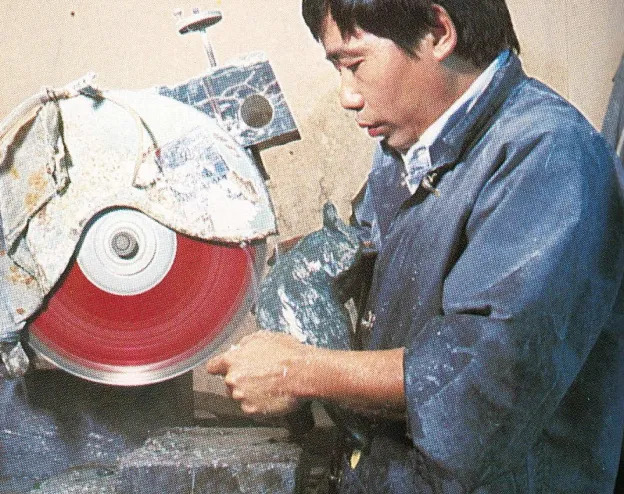
Carving Jade Takes Time
Contemporary jade sculpting represents the culmination of this ancient material’s journey. Master sculptors like David Wong understand both the technical challenges and artistic possibilities that BC jade presents. Their work requires deep knowledge of the stone’s characteristics, from its grain structure to its response to different carving techniques.
The transformation from rough stone to finished sculpture demands patience and skill rarely seen in other artistic mediums. Jade’s hardness requires specialized tools and abrasive techniques rather than traditional carving methods. Each piece must be shaped gradually through grinding and polishing processes that can take hundreds of hours to complete.
Successful jade sculptors develop an intimate understanding of how different stones will respond to their vision. They work with the material’s natural patterns and colour variations rather than against them, creating pieces that celebrate the stone’s inherent beauty while expressing the artist’s creative intent.
Learning From Those Who Came First
Contemporary BC jade sculpture represents a unique cultural bridge between Indigenous traditions and modern artistic expression. Many sculptors acknowledge the stone’s Indigenous heritage while bringing their own cultural perspectives to their work. This synthesis creates art that speaks to multiple traditions while remaining authentic to the material’s character.
The techniques developed by traditional Indigenous carvers continue to inform contemporary practice. Understanding how ancient artisans worked jade provides insights that prove valuable even when using modern tools and methods. This connection to historical knowledge adds depth and authenticity to contemporary jade sculpture.
What Owning Jade Means
The final stage of BC jade’s journey occurs when finished sculptures reach collectors and art enthusiasts. Each piece carries within it the complete story from geological formation through cultural discovery to artistic transformation. When collectors choose authentic BC jade works, they participate in a tradition that spans millennia while supporting contemporary artists who continue this ancient craft.
The stone’s journey from mountain quarry to gallery wall represents more than mere commercial transaction. It embodies the intersection of natural wonder, cultural heritage and artistic vision that makes BC jade sculpture uniquely meaningful in the contemporary art world.
Understanding this remarkable journey enhances appreciation for both the material and the artists who transform it. Each carved piece represents not only hours of skilled labour but also millions of years of geological processes and centuries of cultural knowledge that brought this ancient stone to its final artistic expression.